

2027: Yiaga Africa Raises Concerns Over BVAS Malfunctions, Data Discrepancies During Mock Election
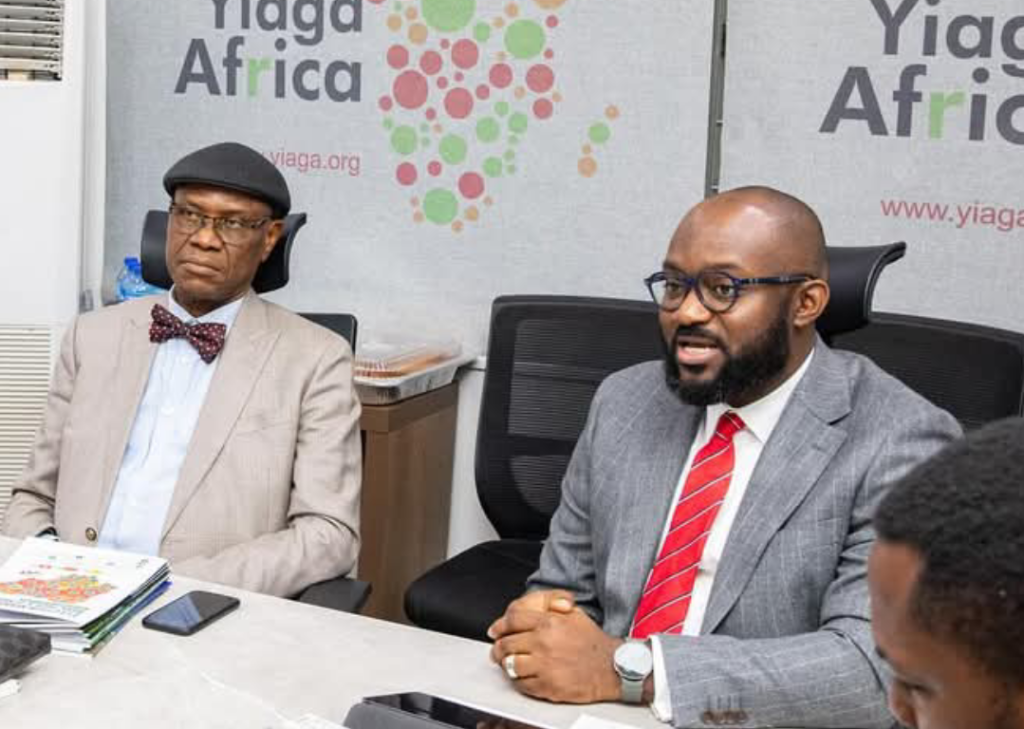
Yiaga Africa has raised concerns over operational lapses, technological challenges and discrepancies in election data recorded during the Saturday’s of Independent National Electoral Commission’s (INEC) nationwide mock accreditation and results upload exercise, warning that the issues could undermine preparations for the 2027 general elections.
The organisation, which deployed its Process and Results Verification for Transparency (PRVT) methodology to observe the exercise across 300 sampled polling units, said although the Bimodal Voter Accreditation System (BVAS) functioned optimally in most locations, several challenges exposed gaps in INEC’s operational preparedness.

In its preliminary statement released in Abuja on Saturday night, Yiaga Africa identified delayed commencement, low voter participation, BVAS malfunctions, discrepancies in polling unit data, connectivity challenges and reported violations of results-upload procedures among the major concerns arising from the exercise.
The statement signed by Yiaga Africa’s Executive Director, Samson Itodo and Board Chairman, Dr Hussaini Abdu showed that only 36 per cent of the observed polling units had commenced the exercise by 9:30 a.m., while the figure increased to 64 per cent by 10 a.m.
It cited instances of delayed deployment of election officials and materials, including Fadan Karshi I Polling Unit in Sanga Local Government Area of Kaduna State, where officials reportedly arrived at 1:40 p.m.
Similarly, at Wanikde Playground Polling Unit in Yala local government area of Cross River state, election officials had yet to arrive as of 1:30 p.m.

Yiaga Africa also reported that officials deployed to Effraya International Market Polling Unit in Etung LGA of Cross River state arrived without voting materials, forcing voters to wait for ballot papers.
On voter participation, the organisation attributed the low turnout partly to inadequate public sensitisation and declining public confidence in the electoral process.
Yiaga Africa recalled that it had urged INEC on November 19 to publish the operational framework and list of designated polling units early enough to encourage participation, noting that the Commission released the list 48 hours after the intervention.
The pro-democracy group noted that BVAS performed satisfactorily in most polling units observed with 68 per cent recording an average voter processing time of between one and two minutes.
It added that 27 per cent of the polling units recorded processing times of between three and five minutes, while four per cent recorded between six and 10 minutes.
However, Yiaga Africa reported technical difficulties in some locations, including Oshin Ladega Polling Unit in Ikorodu, Lagos State, where INEC officials arrived with two BVAS devices instead of the three expected.
At Gumbi/Wajake Yar Abba Polling Unit in Wamakko LGA of Sokoto State, a BVAS malfunction reportedly disrupted accreditation for about one hour before functionality was restored following the replacement of an MTN SIM card with an Airtel SIM card.
Another malfunction was recorded at Maternity Ogunsola Filling Station Polling Unit in Ijero LGA of Ekiti State, where one of two BVAS devices failed, affecting accreditation for voters assigned to the device.
The organisation said INEC officials disclosed that the malfunctioning device, which had 512 registered voters assigned to it, could not be repaired locally because it was configured in Abuja.
Yiaga Africa further questioned the suitability of some polling units selected for the exercise, arguing that many had relatively low numbers of registered voters and a history of low turnout.
It warned that the selection could have limited the exercise’s capacity to adequately test the performance of the electoral technology under high voter traffic, particularly following INEC’s reported procurement of 57,000 additional BVAS devices.
The organisation also identified discrepancies in INEC’s polling unit figures, noting that the INEC’s official figure of 177,299 polling units differed from the 176,846 listed on its Election Results Viewing (IReV) portal.
The difference represents 453 polling units, which Yiaga Africa said required urgent clarification and reconciliation by the Commission.
It also raised concerns over the configuration of Registration Areas on the IReV backend, noting that while the mock exercise was designed to cover 8,838 Registration Areas nationwide, the IReV system was configured with only 8,791, leaving out 47 Registration Areas.
Yiaga Africa warned that such discrepancies could affect the receipt and publication of polling unit results during the 2027 general elections if not urgently addressed.
On transparency and results management, the organisation documented an incident at Majema II Polling Unit in Tsanyawa LGA of Kano State, where the Presiding Officer reportedly declined to scan and upload the polling unit result to IReV at the polling unit.
The group described the development as a deviation from established procedures, warning that such practices could undermine transparency and independent verification of election results.
It also expressed concerns over the use of personal mobile phone hotspots by some Presiding Officers to connect BVAS devices for the transmission of accreditation data and uploading of polling unit results.
According to Yiaga Africa, reliance on personal internet connections raises questions about the adequacy of cybersecurity safeguards for transmitting sensitive election information.
The organisation, however, welcomed additional safeguards introduced into the BVAS to strengthen the integrity of scanned polling unit result sheets but said the measures created difficulties in some locations.
It explained that some devices declined to scan or upload result sheets after detecting inconsistencies between information on the sheets and codes configured on the devices.
Yiaga Africa said the safeguards were necessary but urged INEC to ensure they were adequately tested to prevent legitimate results from being delayed or rejected.
The report indicated that the exercise also recorded incidents of alleged vote-buying and interference.
“In Ibeno Ward, Akwa Ibom State, observers reportedly witnessed the distribution of ₦3,000 to voters and an alleged attempt to influence a Presiding Officer to inflate figures, which the officer reportedly rejected.
“A similar distribution of ₦3,000 was reported at Akwanga Central School. In Oyo State, an individual reportedly disrupted the exercise at Market Square Polling Unit in Iwere-Ile I Ward by tearing a ballot paper and was subsequently arrested by the police.The absence of replacement ballot papers prevented affected voters from continuing with the exercise,”the stated.
On political party representation, Yiaga Africa said APC agents were observed in 49 per cent of the polling units monitored, followed by ADC with 19 per cent, PDP with 16 per cent, NDC with 13 per cent and APM with five per cent.
The organisation called on INEC to strengthen voter sensitisation, improve the technical support system for BVAS devices and establish effective contingency arrangements to address equipment failures during elections.
It also urged the Commission to reconcile discrepancies in its geographical and polling unit datasets, improve training and supervision of election officials, and provide secure and reliable internet connectivity for the transmission of election data.
Yiaga Africa further recommended that INEC introduce system-level controls on the IReV portal to prevent the upload of polling unit results before the stipulated 2:30 p.m. threshold in the electoral guidelines.
The organisation said enforcing the prescribed timeline would strengthen compliance with electoral procedures and improve the integrity of the results-upload process